Storage holds the download
An SSD keeps model files after shutdown. RAM holds working data while the model runs. Leave free disk space for updates and other models. More SSD space does not replace enough RAM.
128 GB/2 TB Windows 11Pro, Performance mode.
Photographs and manufacturer images, with source credits. Select a picture to inspect the full image. The pictured variant may differ from the reviewed unit.
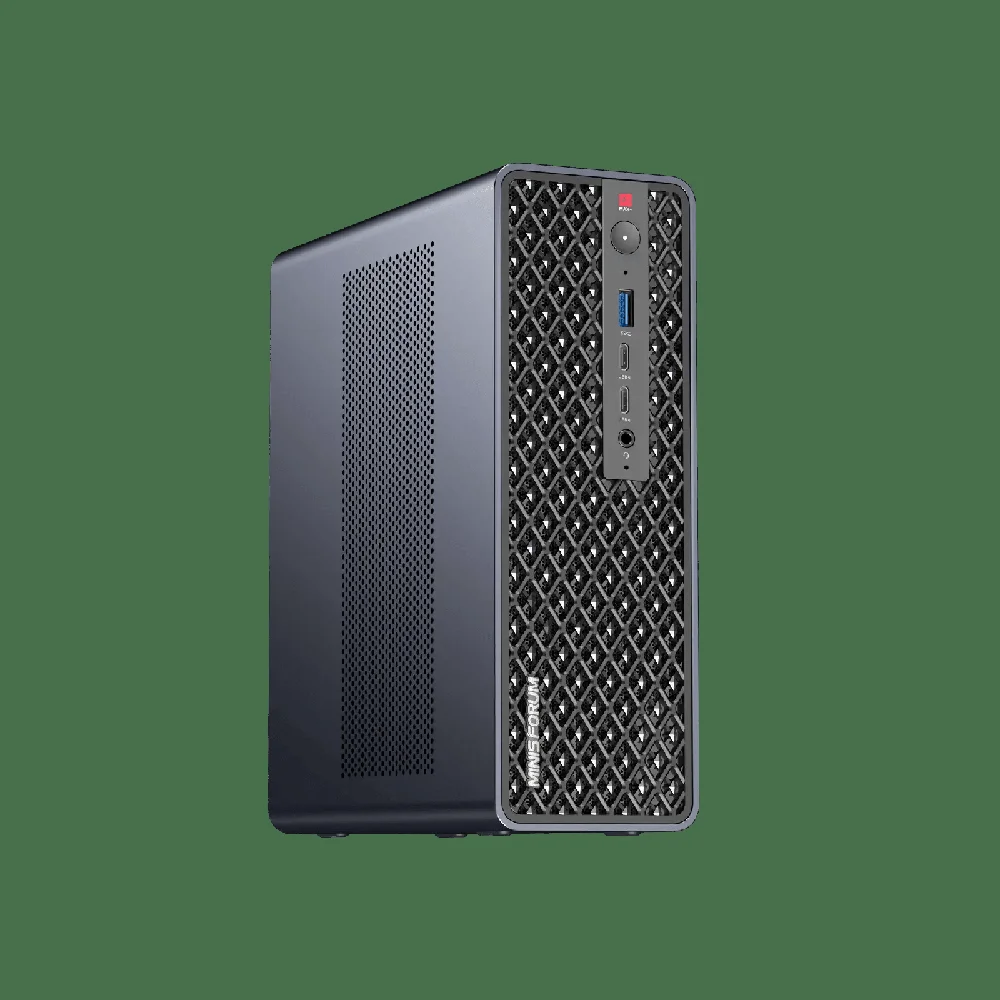
The CPU keeps the system and applications running. The GPU can do many model calculations together when your engine supports it. More cores do not guarantee a faster answer across different chip families.
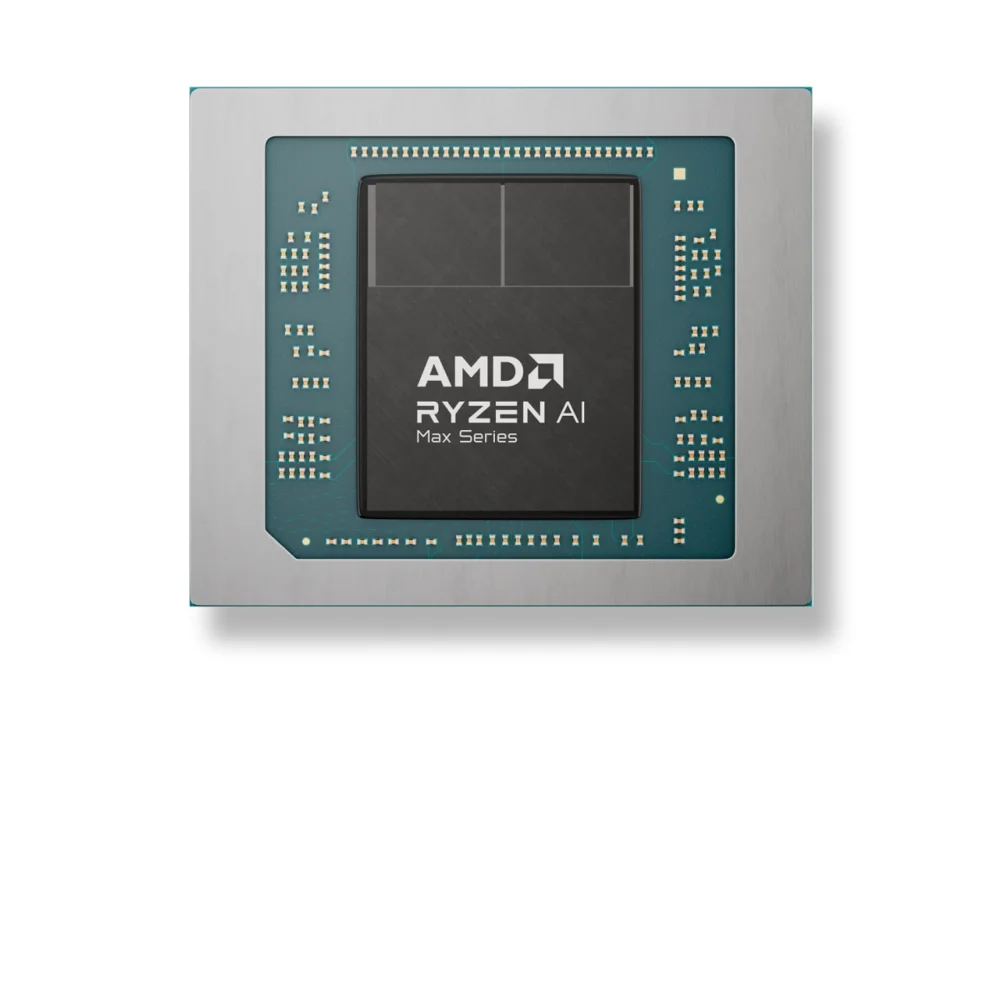
CPU cores and GPU compute units describe different designs. Compare the same model, engine and settings before treating one chip as faster. An NPU or Neural Engine specification does not prove that your chosen language-model application uses it.
System RAM and graphics memory are different resources. A supported engine can use the graphics hardware, but shared allocations still come from real physical system memory. Leave room for the operating system and the context cache.
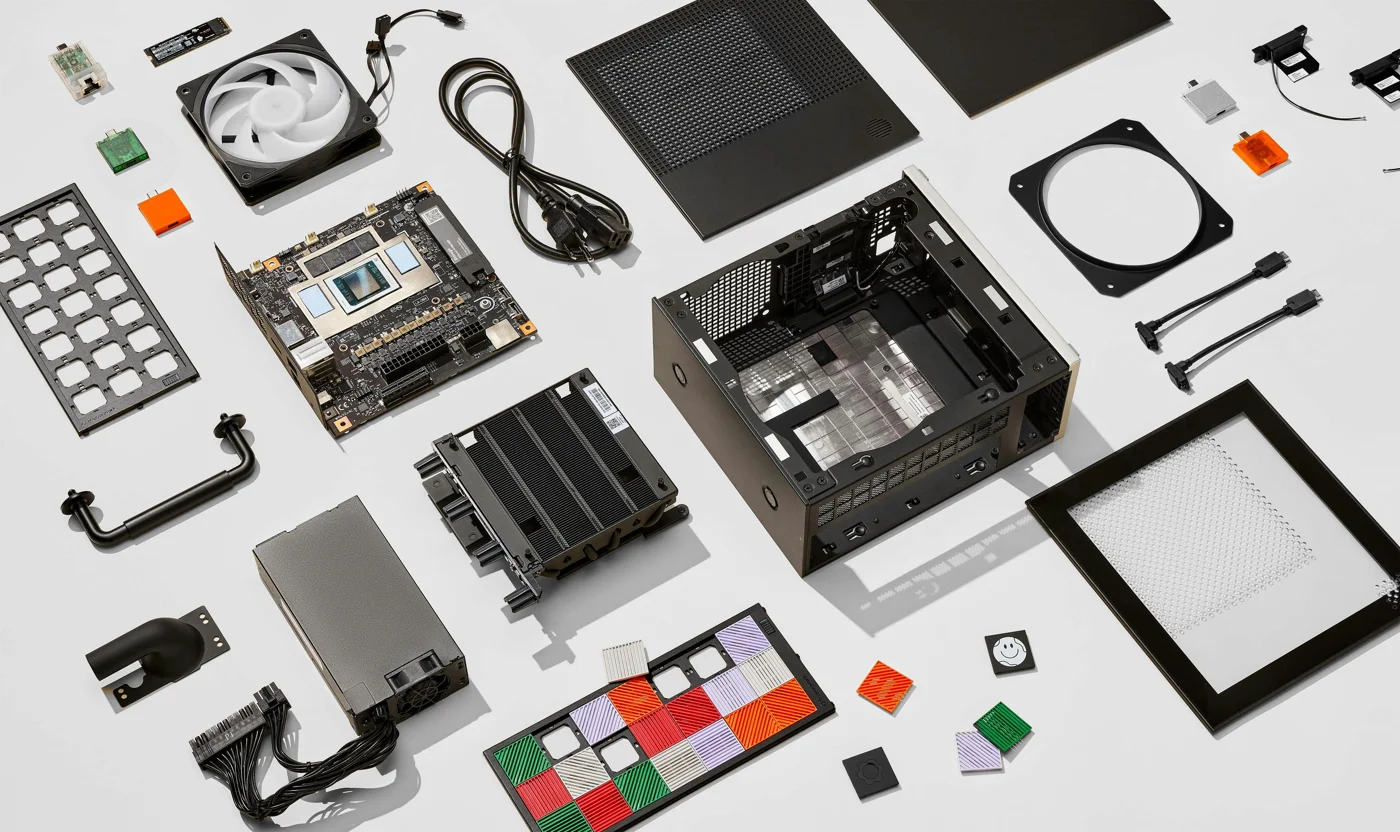
Capacity tells you how much memory is available. Bandwidth tells you how quickly the chip can read it. A model can fit in memory and still respond slowly. Longer context also uses memory for the model’s working cache.
Learn RAM, VRAM and model size →Check the exact memory configuration before buying. Confirm the manufacturer’s service instructions, storage slots and supported drives. External storage can hold model files, but it does not become working RAM.
An SSD keeps model files after shutdown. RAM holds working data while the model runs. Leave free disk space for updates and other models. More SSD space does not replace enough RAM.
Check the monitor, network and drive ports you need. USB-C is a connector shape; check its actual speed and display support. A fast network does not automatically merge two computers’ memory.
These are manufacturer product-family specifications and options. The creator’s exact reviewed configuration is listed separately. Confirm the model number and options before buying.
| Specification | Detail | Source |
|---|---|---|
| Cpu | AMD Ryzen AI Max+395 | Source ↗ |
| Gpu | Radeon8060S,40CUs | Source ↗ |
| Memory | 128 GB | Source ↗ |
| Memory type | LPDDR5X-8000 soldered | Source ↗ |
| Storage | 2 TB PCIe4 QLC reviewed; two M.2 slots | Source ↗ |
| Ports | Dual10GbE; dual rear USB4v2; PCIe4 x4 electrical /x16 physical slot | Source ↗ |
| Power | 320 W internal PSU | Source ↗ |
| CPU cores / threads | 16 / 32; boost up to 5.1 GHz | Source ↗ |
| GPU compute units | Radeon 8060S: 40 compute units | Source ↗ |
| Memory interface | LPDDR5x, 256-bit, up to 8000 MT/s; up to 128 GB | Source ↗ |
| Storage slots | M.2 2280 PCIe 4.0 x4 plus M.2 2280 PCIe 4.0 x1 | Source ↗ |
| Expansion slot | Physical x16 slot, PCIe 4.0 x4 electrical link | Source ↗ |
| Front USB | 2 USB4 40Gbps; USB 3.2 Gen2 10Gbps | Source ↗ |
| Rear USB | 2 USB4 V2 80Gbps, 2 USB 3.2 Gen2, 2 USB 2.0 | Source ↗ |
| Network | Dual 10GbE; Wi-Fi7 and Bluetooth5.4 | Source ↗ |
| Power supply | 320 W internal PSU; not measured AI consumption | Source ↗ |
Confirm your operating system, driver, engine version, model format and quantization. The creator’s named test below is a starting point, not a guarantee that every model or engine works. Check support for this exact AMD or Intel GPU and OS. ROCm, Vulkan and other backends have different compatibility limits.
Plan your model and engineBy ServeTheHome / Ryan Smith and Patrick Kennedy · 2026-01-14
High memory capacity and unusually extensive mini-PC I/O.
Performance mode trades noise/power for speed. Second M.2 slot is PCIe4 x1; expansion slot is not electrically x16.
A plain-English reading companion for this review and its hardware specifications. Select a term to read its meaning and why it matters. These explanations are not a transcript or quotations from the creator.
25 terms
The CPU runs the operating system and general instructions. A core is a unit inside it that can work on instructions.
Why it matters here: More cores can help some jobs, but core counts from different chip families are not a shared speed score.
A graphics processor can do many similar calculations at once. Local AI engines can use that ability to run a model.
Why it matters here: The engine must support the exact GPU and driver. A powerful GPU is not useful to an unsupported engine.
The computer’s working memory. The operating system, applications and a running model use it.
Why it matters here: A downloaded model can fit on your SSD and still be too large to load into working memory.
Memory dedicated to a separate graphics card.
Why it matters here: When a model fits in VRAM with space for its working context, the engine may avoid moving data through slower system memory.
One physical memory pool is shared by the CPU, GPU and the operating system.
Why it matters here: Do not count shared GPU memory as extra RAM. Leave room for the system and other applications.
Names for memory technologies. LPDDR is designed for low-power use and is commonly fitted directly to a board or package.
Why it matters here: The name does not tell you whether you can replace the memory. Check the system’s physical design and upgrade instructions.
Formats for removable RAM modules. SO-DIMMs are smaller and often used in laptops and mini PCs.
Why it matters here: Do not assume every mini PC has memory slots. Many unified-memory systems use soldered memory instead.
GB/s means gigabytes per second; Gbps means gigabits per second. A byte contains eight bits.
Why it matters here: A10Gbps network number is not the same as10GB/s of memory bandwidth. Check the units before comparing specifications.
How much data the memory system can move per second. Capacity and bandwidth describe different things.
Why it matters here: A machine may hold a very large model but generate its answers slowly. Check actual model tests.
An SSD stores files. NVMe is a fast storage protocol. M.2 describes a module and connector format.
Why it matters here: Model downloads live on storage, while a running model needs working memory. Check supported drive sizes and slots before upgrading.
A token is a small piece of text. Tokens per second describes how quickly a model produces or processes those pieces.
Why it matters here: Reading the prompt and writing the answer are different measurements. Ask which stage the reviewer measured.
The amount of text a model can work with at once, including the prompt, conversation and other supplied text.
Why it matters here: A larger setting uses more working memory and can increase loading or response time. Start with enough for your real task.
Working memory that keeps information from earlier tokens so the model can use it while continuing an answer.
Why it matters here: Longer context can make this cache larger. Model-file size alone does not describe total memory use.
A way to store model numbers using fewer bits. Q4 usually describes a roughly four-bit approach, with different formats and tradeoffs.
Why it matters here: Lower-bit files often need less memory, but quality and speed can change. Compare the exact file, not just the model name.
Parameters are the model’s learned numbers. B means billion, so 8B means about eight billion parameters.
Why it matters here: More parameters do not guarantee a better result for every task. The model must also fit and respond at a useful speed.
A mixture-of-experts model uses selected parts of the model for each token rather than every part.
Why it matters here: A small active-parameter count does not mean a small download. You still need to account for the stored model and its working memory.
Running some or all of a model’s work on the GPU instead of the CPU.
Why it matters here: Partial offload can allow a model to run, but it is not proof that the complete model fits in the GPU’s memory.
The software that loads a model and performs its calculations to produce an answer.
Why it matters here: The same hardware can behave differently with different engines, drivers and model files.
Software technologies some engines use to run calculations on supported graphics hardware.
Why it matters here: Support depends on the GPU, engine, driver and operating system. Check the exact setup in the review.
The wait before the model starts producing its answer.
Why it matters here: A system can write quickly once started but still spend a long time reading a large document first.
Retrieval-augmented generation: finding relevant passages from documents and supplying them to a model with your question.
Why it matters here: This can help answer from your files, but you still need to check the cited passages and answer accuracy.
PCIe connects components such as a graphics card to a computer. The host is the rest of that computer.
Why it matters here: A GPU card alone needs a compatible motherboard, CPU, RAM, storage, power supply and cooling.
TDP is a chip cooling or power-design figure. The power supply rating is the amount the supply is designed to provide.
Why it matters here: Neither number alone is a measurement of the full system’s electricity use during your AI task.
A specialized processor for supported AI workloads.
Why it matters here: An NPU specification does not mean your chosen local language-model engine uses it.
Two or more computers working together through software and a network.
Why it matters here: More machines do not automatically mean faster answers or one shared memory pool. Check single-machine and cluster results separately.
Further reading: LM Studio load settings · Quantization · KV cache
These observations belong to this source and configuration. Changing the model file, context or software can change the result.
Engine: Not identified in accessible article text · Quantization: Not specified
Reviewer demonstrated active text generation.
No exact family-and-size catalog link recorded. Use the creator’s source for the tested model.
Good fit when expansion/network ports are necessary; verify Linux NIC drivers for your chosen distribution.
Check current price, regional availability, returns, warranty and the exact memory configuration with the seller. This guide does not guarantee a specific speed.
Early owner feedback flags Linux networking and fan-curve issues; verify the current software state. Read the owner discussion ↗
Have this hardware? Share the exact model file, engine version, memory, context length, speed and any setup problems.
Contribute your testCheck memory, storage, model number, seller warranty, returns and shipping to your country. A product-family name does not identify every component inside.
View manufacturer options ↗