On this page
Embeddings support meaning-based searchEmbedding and chat models have different jobsUse the same embedding model consistentlyLanguage and subject matter affect retrievalSearch results need evaluationTry it yourselfSourcesAn embedding represents content as numbers so a search system can compare meaning and find related items.
Machine Learning Crash Course: Embeddings
The video shows how embeddings place related items in a useful numerical space. The lesson applies that idea to semantic document search and separates retrieval from final answer writing.
Watch on YouTube or turn on captions ↗Here is what matters, why it matters and how to check it on your own setup.
Embeddings support meaning-based search
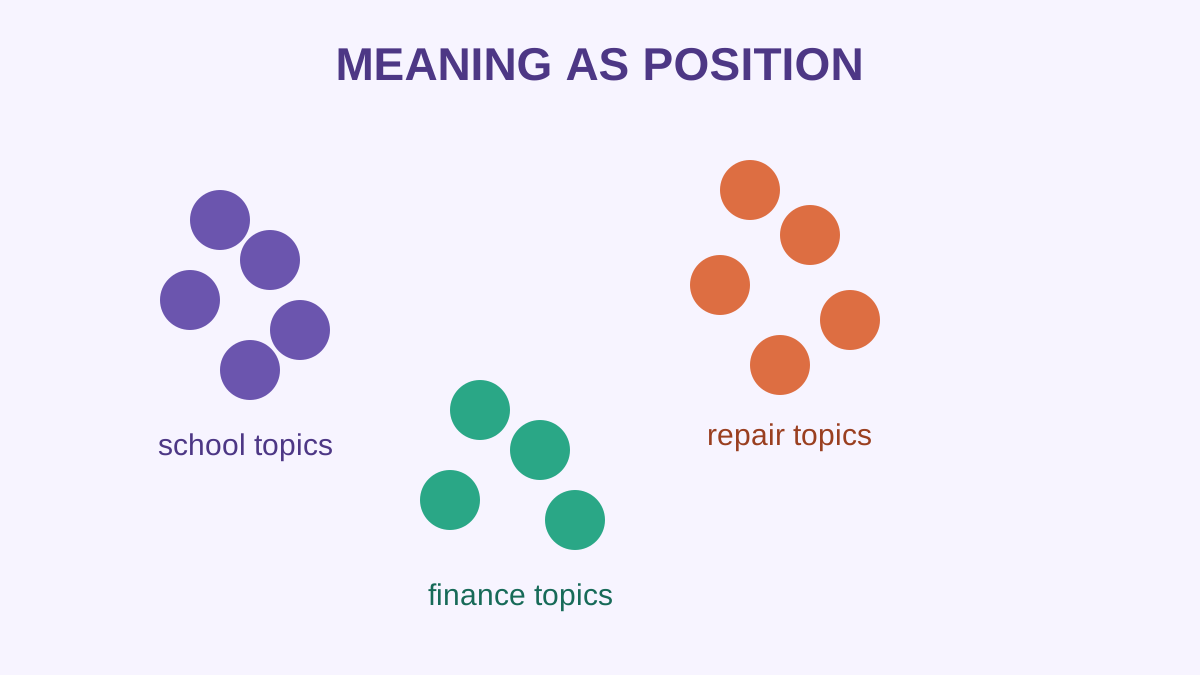
An embedding model turns a passage into a list of numbers. Similar meanings should produce representations that are closer in that number space.
People normally use software to compare these numbers. You do not read them yourself.
A simplified learning diagram. Exact implementations can differ.
Embedding and chat models have different jobs
The embedding model finds likely passages. A language model may then use those passages to write an answer.
A good writer cannot repair a search system that repeatedly retrieves the wrong evidence.
Use the same embedding model consistently
Documents and questions must be represented in a compatible way.
If you change the embedding model, rebuild the document index rather than mixing old and new vectors.
Language and subject matter affect retrieval
An embedding model may work better in some languages or types of text than others.
Test the languages, abbreviations, and questions your users actually use.
Search results need evaluation
Prepare questions with known supporting passages and questions with no answer.
Measure whether the correct passage appears near the top, not whether the final chat answer merely sounds good.
Try it yourself
Use harmless information for this exercise. Record what you observe instead of treating one result as a universal rule.
- Create three short passages about different topics.
- Ask the same idea using words that do not exactly match the correct passage.
- Check whether meaning-based search returns the correct text first.
Quick check: open the recap
Do embeddings write the final explanation? Usually no. They help find related content for another step.
Finished this lesson?
Mark it complete when you have read the lesson and tried the exercise. This saves progress on this browser. It is your own assessment, not a test score.
Sources for this lesson
Official documentation supports product and model facts. Community discussions show real setups, failures, and questions. A community result is supporting evidence, not a promise that another computer will perform the same way.
Watch a real test. Check what fits your computer.
See practical local AI tests from DeviceTerra, then use MamiLens to build a hardware-aware shortlist for your own setup.
This guide is educational. Model software, licenses, and hardware support can change. Check official sources before an important deployment.